.png)
Homeowners Insurance on the Central Coast: Beyond Fire

Updated: 2 days ago
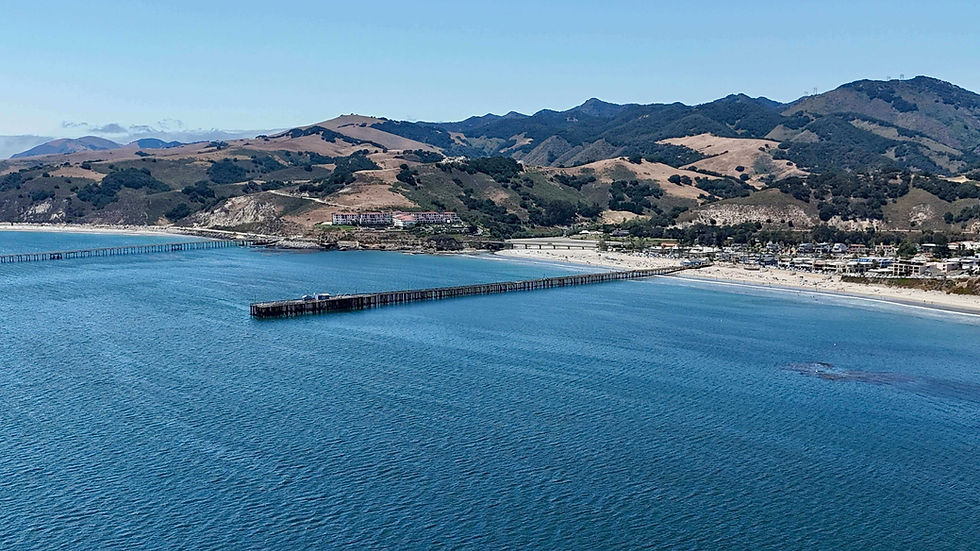
By the time buyers reach us, they have usually heard the fire insurance stories, and we take those seriously. But fire is one line on a policy, and with homeowners insurance on the Central Coast the other lines are just as worth reading. A bluff-top home in Shell Beach, a creekside cottage in Arroyo Grande, and a ranch house on a well outside Templeton each carry risks that a standard policy may cover poorly, or not at all. Here is what we make sure our clients look at.

FIRE-ZONE MAPPING · CARRIER AVAILABILITY · THE FAIR PLAN
Start with the fire question, then keep going
Fire-zone mapping and carrier availability shape the first conversation about any San Luis Obispo County home, and we have written about that separately in our fire insurance guide for buyers. The short version: get quotes early in escrow, not the week before closing, and understand whether the property will be written by a standard carrier or through the California FAIR Plan with a separate wrap-around policy.
What follows assumes you have that handled and asks what else the policy needs to do.
EXCLUDED FROM STANDARD POLICIES
The two big exclusions: earthquake and flood
Earthquake
Standard homeowners policies in California exclude earthquake. Coverage is offered separately, most commonly through the California Earthquake Authority via your regular carrier, and it comes with its own deductible structure that is typically a percentage of the coverage rather than a flat amount.
The Central Coast sits near several mapped faults, and older homes in downtown San Luis Obispo, Paso Robles, Morro Bay, and the Village of Arroyo Grande can be of an age where foundation bolting and cripple-wall bracing were not original. Things we look for:
whether the house has been retrofitted, and whether the seller has documentation
raised foundations versus slab, and the condition of the crawl space
masonry chimneys, which are the most common earthquake casualty
water heater strapping, a small thing that insurers and inspectors both note
Whether to buy earthquake coverage is a personal risk decision, and we tell clients to price it and then decide, rather than defaulting to no.
Flood
Flood is also excluded from standard policies and is covered through the National Flood Insurance Program or private flood carriers. If a home sits in a mapped Special Flood Hazard Area and you have a mortgage, your lender will require it. If it does not, coverage is optional but still worth considering in low-lying areas, because winter storms on the Central Coast have flooded neighborhoods that are not in a mapped zone.
Areas where flood comes up most often include Oceano and the lower Arroyo Grande Creek, creekside blocks of downtown San Luis Obispo and the Mid-Higuera area, low ground near Laguna Lake, the Salinas River corridor through Paso Robles, Templeton, Atascadero, and San Miguel, and the creek mouths in Cambria, Cayucos, and Morro Bay. Our post on flood zones in SLO County maps it in more detail.

BLUFF AND EROSION · WIND AND SALT · SEWER BACKUP
Coastal exposure
Living within sight of the ocean brings a few coverage questions that inland owners never face:
Bluff and erosion. Damage from land movement, bluff retreat, and subsidence is generally excluded from homeowners policies. That means the risk of a bluff-top lot losing ground is not an insurance question but a due-diligence question, which we address through geologic reports. Our guide to bluff-top homes explains.
Wind and salt damage. Wind is covered on most policies, but gradual corrosion from salt air is maintenance, not a claim. Metal roofs, railings, and fixtures in Cayucos, Morro Bay, and Pismo Beach age faster, and the policy will not replace them for that reason.
Sewer and water backup. Coastal neighborhoods with older infrastructure can experience backups during heavy rain. Sewer backup is a common optional endorsement, inexpensive relative to the mess it covers.
OUTBUILDINGS · WELLS AND SEPTIC
Rural property: wells, septic, outbuildings, and animals
Rural coverage has its own checklist:
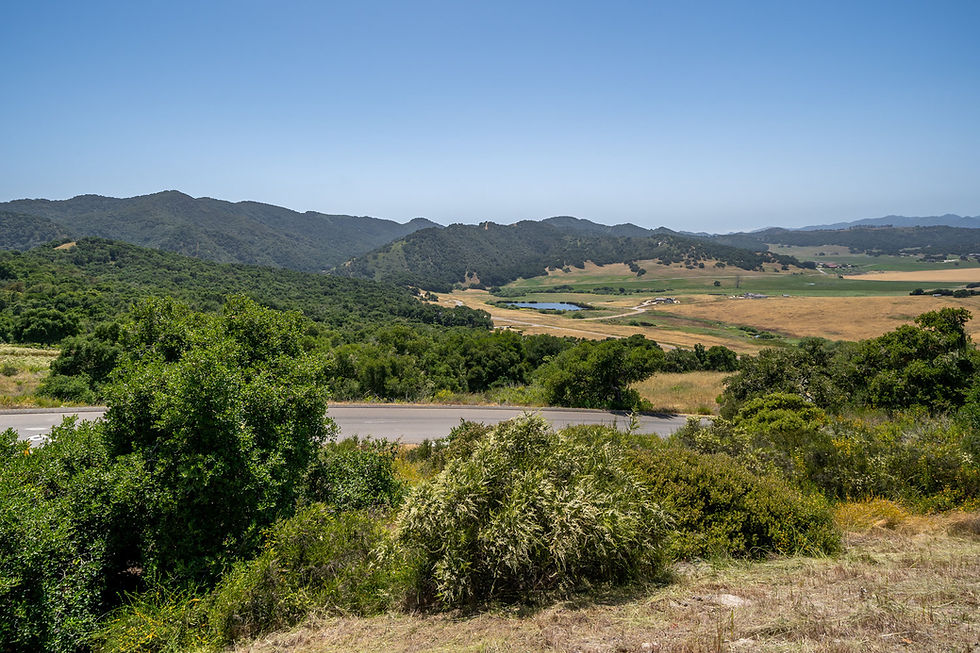
Outbuildings. Barns, shops, and guest houses are covered under "other structures," usually at a set fraction of the main dwelling's coverage. A large shop or a permitted ADU can exceed that default and need scheduled coverage.
Wells and septic. Mechanical breakdown of a well pump is often not covered, and septic failures rarely are. Some carriers offer equipment breakdown endorsements. Our post on well and septic basics explains what you are actually maintaining.
Liability for animals and land. Horses, livestock, a pond, or trails that neighbors cross all raise the value of solid liability limits, and some owners carry an umbrella policy.
Vacancy and second homes. A home that sits empty for long stretches, or one used as a vacation rental, may need a different policy form entirely. Standard policies can restrict coverage if the home is vacant beyond a set period.
CONTRACTORS · COASTAL PERMITTING · DWELLING LIMITS
Replacement cost in a high-cost building market
Rebuilding on the Central Coast is expensive. Contractor availability is limited, coastal zone permitting adds time, and materials have to travel. Policies written on a "replacement cost" basis are only as good as the dwelling limit, and limits set years ago often lag today's construction costs. We encourage buyers to ask their agent about extended or guaranteed replacement cost, building code upgrade coverage, and whether the dwelling limit reflects current local costs rather than a national estimate.
QUOTES · FINDINGS · THE BINDER · COVERAGE LIMITS
The practical sequence during escrow
As soon as your offer is accepted, send the address to your insurance agent and get quotes for the homeowners policy, plus earthquake and flood.
Share the inspection and any geologic or fire-hazard findings with the agent; they change the quote.
Confirm the carrier will bind coverage on the closing date, and get the binder to your lender.
Review "other structures," personal property, and liability limits against what you actually own.
Revisit the whole policy annually, because the market here keeps changing.
A good policy on the Central Coast is not one that is cheap. It is one that would actually rebuild the house you bought.

Next step
Before you write an offer on a coastal, creekside, or rural home, ask us for an insurance preview: what we know about that area's fire designation, flood mapping, and the kinds of coverage other buyers have needed there. We will point you to a local agent who knows the county, and we will make sure the timeline in escrow gives you room to shop. Confirm all coverage specifics with your insurer. Reach us through our contact page.

Talk With Kim & Kristen
We are Kim San Jule and Kristen Gentry, Broker Associates with Real Broker, serving San Luis Obispo County and the Central Coast. Whether you are buying, selling, or simply thinking ahead, we are glad to be a resource.
Kim San Jule · Broker Associate, DRE 01948144 · 805-345-8303 · kimsanjule@gmail.com
Kristen Gentry · Broker Associate, DRE 01968754 · 805-441-4618 · kristengentryslo@gmail.com
Real Broker · Search Central Coast homes for sale