.png)
Paso Robles Wine Country for Beginners

Updated: 2 days ago
The first time you drive Highway 46 West out of Paso Robles, the sheer number of winery signs can be a little disorienting. Hundreds of wineries, a dozen sub-regions, a vocabulary of Rhône blends and Bordeaux varieties, and every local you meet has a strong opinion about which ones to visit. If you are new to Paso Robles wine country, or just new to wine, it helps to have someone lay out the basics without the snobbery.
We are not sommeliers. We are two real estate agents who have lived on the Central Coast for a long time and spend a great deal of time in North County. This is the version of Paso we give to friends and clients who are just starting.

NORTH COUNTY · WEST SIDE & EAST SIDE
The lay of the land
Paso Robles sits in the northern part of San Luis Obispo County, on the far side of the Cuesta Grade from the city of SLO. The town itself is built around a central park, and the wine country spreads out on both sides of Highway 101.
The single most useful thing to understand is the west-versus-east distinction.
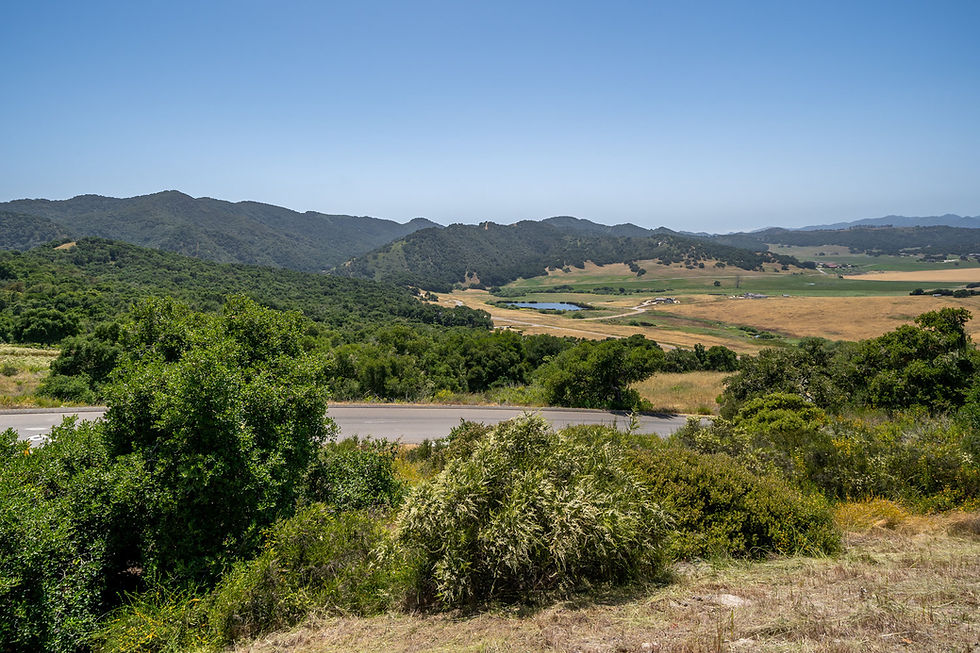
The west side, reached via Highway 46 West, Peachy Canyon Road, and Adelaida Road, is hilly, cooler, and closer to the ocean influence that comes through the Templeton Gap. The soils are limestone-heavy. This is where many of the most celebrated producers sit.
The east side, along Highway 46 East and the roads toward Creston and San Miguel, is flatter, warmer, and more open. It has larger operations, many family-friendly tasting rooms, and generally more approachable pricing.
The Paso Robles AVA has been formally divided into eleven sub-AVAs, with names like Adelaida District, Willow Creek, Templeton Gap, El Pomar, and Estrella. You do not need to memorize them. Just know that "west side" and "east side" is the shorthand locals use, and that the differences are real.
We wrote a whole piece on that divide from a homebuyer's perspective: Paso's westside vs eastside, where the line is and why it matters.
THE GRAPES
The grapes
Paso's identity is built on warmth and diversity. The broad strokes:
Rhône varieties (Syrah, Grenache, Mourvèdre, Viognier, Roussanne) are what put Paso on the map for serious wine people. Tablas Creek, a partnership with a famous Rhône estate, is the reference point.
Cabernet Sauvignon and Bordeaux blends are the biggest category by volume and the basis of many of the region's best-known labels.
Zinfandel is the historic grape. Paso was Zinfandel country long before it was anything else, and old-vine Zin is still a signature.
Everything else: Paso is experimental. You will find Albariño, Tempranillo, Petite Sirah, Italian varieties, sparkling wines, and blends that would not pass in stricter regions.
The style is generally ripe, generous, and food-friendly. If you like wines with fruit and body, you will be happy here.

DAY ONE
A first-day loop for beginners
You cannot see it all, and trying is how people end up exhausted. Here is a reasonable first day.
Start on the west side. Drive Highway 46 West in the morning and choose one estate with a view. Justin and Daou in the Adelaida hills are the most famous hilltop experiences; both typically require reservations. Tablas Creek is the Rhône benchmark. Halter Ranch and Adelaida Vineyards are large, beautiful properties with a strong sense of place.
Have lunch in Tin City. This former industrial area on the south edge of Paso, near Templeton, has become a cluster of small wineries, a cidery, a distillery, and food. It is walkable, casual, and a great way to sample several producers without driving.
Pick one east-side stop on the way back. Eberle is one of Paso's founding wineries and has cave tours. Vina Robles has a large, welcoming estate and a concert amphitheater. J. Lohr is a large producer with an easy, approachable tasting room.
End downtown. The blocks around the City Park have tasting rooms, restaurants, and a plaza that fills on warm evenings.
Our weekend in Paso Robles itinerary extends this into two days.
LIVE LIKE A LOCAL
How locals do it differently
Locals rarely do the marquee tour. They:
Join a club or two. Wine club pickup parties are how North County residents socialize, and many wineries treat members like regulars.
Go to the small places. The producers with no sign and a tasting room in a barn are where you find the wines that never leave the county.
Skip peak weekends. Harvest Wine Weekend in fall and the big spring festival weekends are wonderful, but locals often taste on a Thursday.
Eat first. Paso's restaurant scene is now as strong as its wine, and downtown has become a legitimate food destination.
Take the back roads. Peachy Canyon, Vineyard Drive, and the roads through Templeton are the drives locals show off.
SKIP THESE MISTAKES
What beginners get wrong
Trying to visit six wineries. Three is plenty. Four is a lot.
Ignoring the east side. Some of the best value and most relaxed tasting rooms are east of 101.
Not making reservations. Many west-side estates require them now, and the good ones fill up.
Underestimating the heat. Paso summers are hot. Bring water, start early, and do not be surprised when the temperature swings dramatically between morning and afternoon.
Forgetting Templeton. The small town just south of Paso has its own tasting rooms, a Saturday farmers market, and a slower pace.
IF YOU ARE THINKING ABOUT MOVING
Why this matters if you are thinking about moving here
We include this guide because wine country is often the first reason people come to North County and rarely the reason they stay. What keeps them is the town underneath it: the park, the schools, the space, the community, and a downtown that has grown into something special.
If you find yourself on a tasting-room patio thinking about a house, our guide to living in Paso Robles: East Side, West Side, and Downtown is the next read, and our comparison of Paso Robles vs Templeton for wine country buyers will help you narrow it.
Every Paso local we know has a version of the same story: they came for a weekend of wine, and then they started looking at houses.
Your first day, planned
If you would like, we will sketch a first-day loop that passes through the neighborhoods you are curious about between tasting rooms. It is a low-pressure way to see both the wine country and the town. Browse homes for sale in Paso Robles and Templeton, and let us know which side of 101 you gravitate toward.

Talk With Kim & Kristen
We are Kim San Jule and Kristen Gentry, Broker Associates with Real Broker, serving San Luis Obispo County and the Central Coast. Whether you are buying, selling, or simply thinking ahead, we are glad to be a resource.
Kim San Jule · Broker Associate, DRE 01948144 · 805-345-8303 · kimsanjule@gmail.com
Kristen Gentry · Broker Associate, DRE 01968754 · 805-441-4618 · kristengentryslo@gmail.com
Real Broker · Search Central Coast homes for sale


