.png)
Buying in a Fog Belt: Homes That Handle It and Homes That Don't

Updated: 2 days ago
It is the middle of summer, you are standing in a backyard in Los Osos, and you cannot see the neighbor's fence. Welcome to the SLO County fog belt. Locals will tell you it burns off by afternoon, that it keeps the coast cool, and that the light when it lifts is worth every grey morning. All true.
What they may not tell you is that fog is hard on houses, and that some houses are built for it while others quietly fight it and lose. This is how to tell which one you are looking at.

MAPPING THE MARINE LAYER
Where the fog belt actually is
The marine layer settles most reliably along the immediate coast and in the low, ocean-facing towns: Los Osos and Baywood, Morro Bay, Cayucos, Cambria, and the beach-side neighborhoods of the Five Cities from Shell Beach through Oceano. San Luis Obispo gets it in the mornings but clears earlier. Arroyo Grande's mesa and valley sit on the edge. Inland, it is mostly a memory by breakfast.
Within the fog towns, elevation changes everything. Homes on the hillsides above Morro Bay or the upper streets of Cambria's Lodge Hill often rise above the layer while the flats below stay grey. Our town-by-town guide to Central Coast microclimates maps these differences.
MOISTURE, MILDEW, AND METAL
What fog does to a house
Fog is water. Fine, persistent, salted water that lands on everything, seeps into everything, and rarely gives a house a full day to dry out in summer. The effects show up in predictable places:
Wood absorbs moisture, swells, and eventually rots where it cannot dry, especially decks, fascia, window sills, and siding near the ground.
Interiors develop mildew in closets, on north-facing walls, behind furniture, and in bathrooms without strong ventilation.
Crawlspaces stay damp, which invites mold, pests, and fungus damage to the framing above.
Metal corrodes, which we cover in more depth in our post on buying a coastal home.
Paint and finishes fail faster, and dark exterior colors that never warm up in sun can hold moisture longer.
None of this makes fog-belt homes bad investments. Some of the most beloved homes in the county sit in the grey. It makes them homes that require a specific kind of design and care.
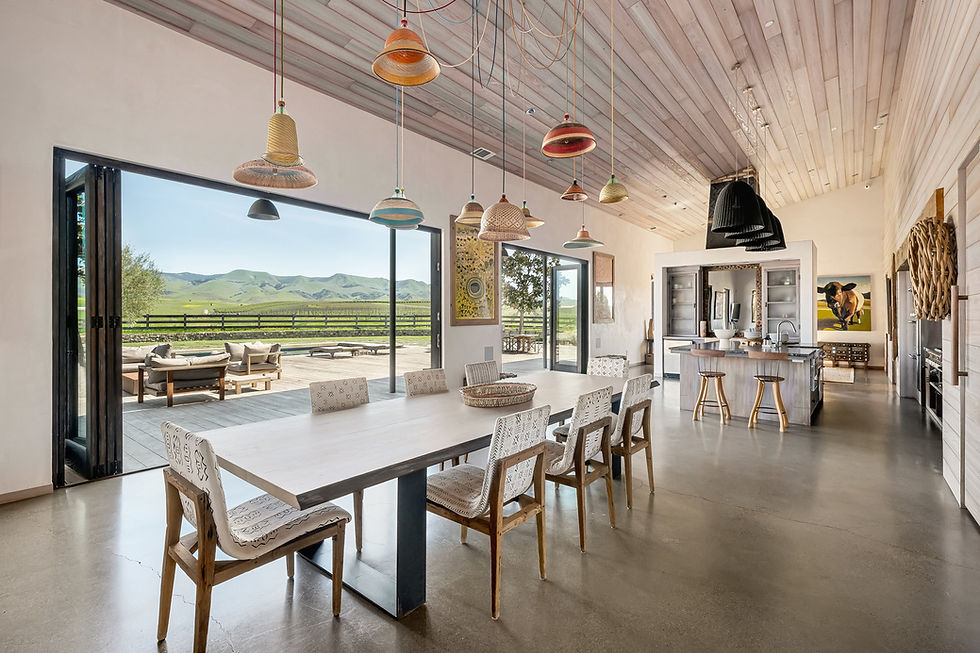
WHAT WORKS
The homes that handle it
Over years of touring, we have noticed the fog-belt homes that stay healthy share traits.
They breathe. Good cross-ventilation, functioning bath and kitchen fans that vent outside, and open crawlspace vents with a proper vapor barrier. Some owners add whole-house fans or dehumidifiers and swear by them.
They shed water. Generous roof overhangs, gutters that work, grading that moves water away from the foundation, and decks with proper flashing and spacing between boards.
They use the right materials. Fiber-cement or well-maintained wood siding, marine-grade or stainless hardware, composite decking or naturally durable wood, and exterior paint kept up on schedule.
They face the light. South and west-facing rooms and yards get whatever sun the day offers and dry faster. A home oriented toward the afternoon clearing feels entirely different from one that faces a north slope.
They are heated sensibly. Fog-belt homes are rarely hot, but a home that is never warm is a home that is never dry. Efficient heating, even in summer mornings, keeps interiors ahead of the moisture.
WHAT TO WATCH FOR
The homes that struggle
The warning signs are just as consistent:
A musty smell the moment you open the door, especially on a foggy morning. This is the most reliable inspection tool we know.
Closed-up rooms with no fans, painted-shut windows, or blocked crawlspace vents.
Soft wood at the base of exterior trim, door jambs, and deck posts, which you can find with a gentle press of a thumb.
Dark, north-facing lots shaded by trees or hills that never see direct sun.
Flat roofs and minimal overhangs that let water sit and run down the walls.
Deferred paint and caulk, which tell you the moisture has had years to work.
Interior condensation on windows, a sign of poor ventilation and often single-pane glass.
A struggling home is not automatically a pass. Many of these issues can be corrected with ventilation upgrades, drainage work, and a maintenance reset. But they need to be priced into the offer and addressed early, and a pest and dry rot inspection becomes essential rather than optional. Our post on what comes up again and again in Central Coast inspections lays out what to expect.

DAY TO DAY
Living in it: what changes for you
Fog shapes the daily life of a household, not just the house. Laundry dries slower outside. Gardens favor coastal plants and struggle with heat-lovers. Mornings are for coffee and layers; afternoons are for the beach.
Furniture against exterior walls needs an inch of air behind it. And the reward, which every fog-belt local will describe with real affection, is a cool, quiet, green world when the rest of California is baking, and evening light on the water that no inland town can match.
We wrote about the year-round maintenance side in Owning a Home in the Fog Belt, and about the way summer works here in Living on the Central Coast in Summer.
The fog does not ruin houses. Ignoring it does. Buy the home that was built and cared for with the fog in mind, and you will love the grey mornings.
A tour strategy for fog-belt buyers
Tour twice: once on a clear afternoon so you can see the house, and once on a foggy morning so you can smell it. Bring a flashlight for the crawlspace and press your thumb on the trim. Ask the seller how they ventilate and what they repaint and when. Notice which way the living spaces face.
Then send us the address. We will tell you where it sits relative to the layer, what the pest history looks like in county records, and which inspectors we trust for moisture-heavy homes. If you are still choosing a town, our coastal listings span the whole fog belt, from Cambria to Oceano, and we will help you find the ones built to handle it.

Talk With Kim & Kristen
We are Kim San Jule and Kristen Gentry, Broker Associates with Real Broker, serving San Luis Obispo County and the Central Coast. Whether you are buying, selling, or simply thinking ahead, we are glad to be a resource.
Kim San Jule · Broker Associate, DRE 01948144 · 805-345-8303 · kimsanjule@gmail.com
Kristen Gentry · Broker Associate, DRE 01968754 · 805-441-4618 · kristengentryslo@gmail.com
Real Broker · Search Central Coast homes for sale


