.png)
Buying Acreage in North County: What the Land Is Really Worth

Updated: 2 days ago
Two parcels come up on the same weekend east of Paso Robles. Both are roughly the same size. Both have oaks, a view, and a listing that says "bring your dreams."
One is priced far above the other. Your instinct says the cheaper one is the deal. Our experience says it's probably not, and that the price gap is telling you something the listing isn't.
Buying acreage in North County is one of the most misunderstood purchases on the Central Coast, because buyers price it by the acre when the market prices it by what the acre can actually do. This post explains what really drives land value from Atascadero to San Miguel, and how to figure out what a parcel is worth to you.

FLAT · WELL-WATERED · ROAD-FRONTED · BUILDABLE
Start by forgetting price per acre
Price per acre is the land version of price per square foot: a quick comparison that hides everything important. A flat, well-watered, road-fronted, buildable parcel in Templeton and a steep, dry, landlocked parcel in the hills behind it can be the same size and differ in value by a very wide margin. The acreage count is nearly irrelevant. What matters is the list of attributes below, and a parcel's value is roughly the sum of how many it has.
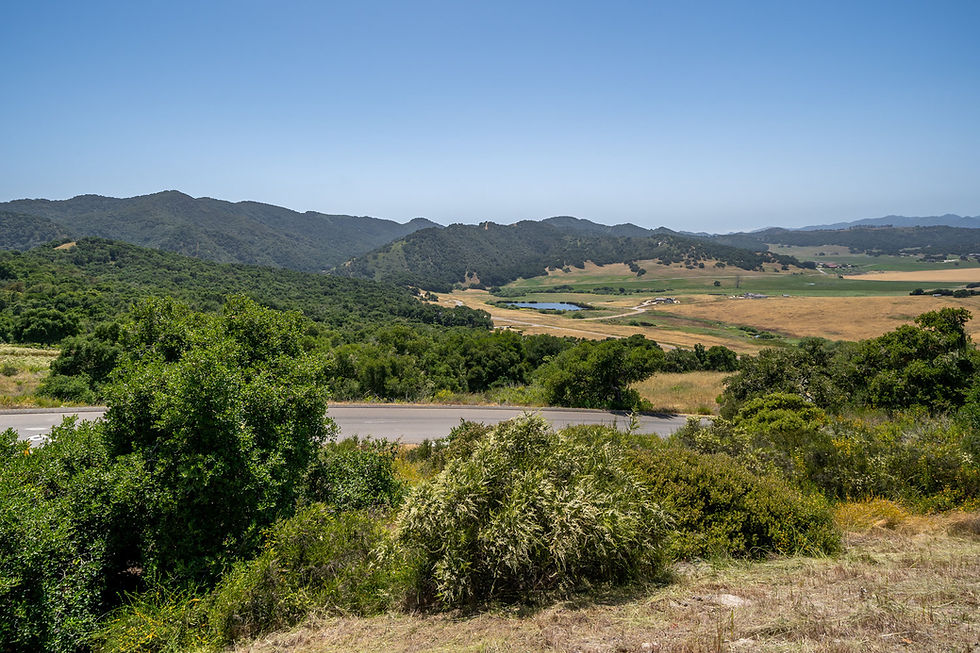
WATER · THE SINGLE LARGEST FACTOR
The attributes that drive land value in North County
Water. The single largest factor. A parcel with a proven, productive well, or a legal connection to a reliable water source, is worth far more than one without.
Undeveloped land with no well is a gamble: drilling is expensive, the result is uncertain, and in parts of the Paso Robles basin, groundwater is under active management with rules that continue to evolve. Ask for well logs, tests, and any basin reporting history. Confirm what you're allowed to pump. We wrote about the broader water picture in water in SLO County.
Legal, physical access. A recorded easement or county road frontage that a vehicle can actually use year-round. A parcel that requires crossing a neighbor's land without a recorded easement is close to unbuildable, and one at the end of a steep dirt track has a real cost attached in road work.
Buildability. Slope, soils, septic feasibility, and the presence of a reasonable building site. A parcel that can't pass a septic percolation test or has no flat spot for a home is a very different asset from one that can and does. A geotechnical or soils evaluation is often worth commissioning during escrow.
Utilities. Power at the property line versus power a long distance away. The cost to bring electricity to a remote parcel can rival the price of the land itself. Propane and septic are standard; the question is what else is already there.
Zoning and minimum parcel size. This determines whether the land can ever be split, how many residences it supports, and what commercial or agricultural uses are allowed. A parcel at or below the minimum size for its zone cannot be subdivided, which caps its future value. Confirm this with the county directly.
Agricultural status. Williamson Act contracts lower taxes but restrict use and development. They're an asset for a buyer who plans to farm and a constraint for one who doesn't.
Fire zone and insurability. Much of rural North County sits in high or very high fire-severity zones. Insurance costs and availability directly affect what the land is worth to a buyer who plans to build. Our post on fire insurance on the Central Coast is essential reading.
Existing improvements and their permit status. Fencing, wells, barns, roads, and pads all add value if they're sound and permitted. Unpermitted structures can subtract value if they need to be removed or legalized.
Location and character. Distance to Highway 101 and to town.
Views. Oak cover. Neighbors.
The Westside of Paso commands more than the Eastside; Templeton commands more than Creston; parcels with a vineyard-view or a creek command more than open rangeland. Our guide to Paso's Westside vs Eastside explains the geography.

NO WELL · EASEMENTS · SLOPE · POWER · ZONING
Why the cheap parcel is usually cheap
Go back to those two listings. In our experience, the lower-priced one is almost always missing one or more of the attributes above. No well.
A questionable easement. Slope that makes building expensive. Power far away.
A fire zone that scares insurers. Zoning that prohibits what you want to do.
None of those is necessarily disqualifying. Some buyers are exactly the right fit for a parcel with a solvable problem, because they can solve it for less than the discount.
But you have to know what the problem is, and what solving it costs, before you can decide whether the price is a bargain. A cheap parcel with an unsolvable problem is not cheap. It's just unsellable, and you'd be the next person trying to sell it.
TITLE REVIEW · ZONING AND COUNTY RESEARCH
What to do during escrow on raw land
Land escrows have different contingencies than home purchases, and they take longer. Here's the sequence we use.
Title review first. Easements, access, encumbrances, mineral rights, and any recorded agreements. If access isn't solid, stop here. Our post on reading a preliminary title report walks through it.
Zoning and county research. Confirm the designation, minimum parcel size, allowed uses, and any overlays. Ask the county planning department directly; don't rely on the listing.
Water. Well test if there's a well. If not, talk to local well drillers about depth and success rates in that immediate area, and understand the basin rules.
Septic feasibility. A perc test or soils evaluation, especially on clay-heavy or rocky ground.
Utilities. Get a written estimate for bringing power to the building site if it isn't already there.
Survey. If the boundaries are unclear or the fences don't match the deed, get a survey. Boundary disputes on rural land are common and expensive.
Insurance quote. Before you close, know what it will cost to insure a home on this parcel.
Walk it in different conditions. Winter and summer look very different in North County. If you can only see it once, ask neighbors what it's like the rest of the year.
The full timeline from purchase to a finished home is longer than most buyers expect, and we laid it out honestly in buying land to build on in SLO County.
CATTLE · VINEYARD · A QUIET HOME ON ACREAGE
What the land is worth to you
After all the diligence, there's still a personal question. A parcel's market value is what a typical buyer would pay. Its value to you depends on what you plan to do with it.
A buyer who wants to run cattle values pasture, fencing, and stock water. A buyer who wants a vineyard values soil, aspect, and irrigation water. A buyer who wants a quiet home on acreage values the building site, the view, and the drive to town, and may not care about the rest.
The same parcel can be a great deal for one and overpriced for another. Be honest about which buyer you are, and price the land against that, not against the listing's marketing.
Land in North County isn't priced by the acre. It's priced by the well, the road, the zoning, and the fire map. Everything else is scenery.
Your next step
Send us the parcel you're looking at, or describe what you want to do with land in North San Luis Obispo County, and we'll run the attribute check: water history, access, zoning and minimum parcel size, fire zone, and utilities. We'll tell you what's there, what's missing, and what the gap is likely to cost, so you can decide what the land is really worth to you before you make an offer. Our current listings include land and acreage across the North County if you'd like to start browsing.

Talk With Kim & Kristen
We are Kim San Jule and Kristen Gentry, Broker Associates with Real Broker, serving San Luis Obispo County and the Central Coast. Whether you are buying, selling, or simply thinking ahead, we are glad to be a resource.
Kim San Jule · Broker Associate, DRE 01948144 · 805-345-8303 · kimsanjule@gmail.com
Kristen Gentry · Broker Associate, DRE 01968754 · 805-441-4618 · kristengentryslo@gmail.com
Real Broker · Search Central Coast homes for sale


